
What happens when a disaster knocks out sanitation in Waterbury?
Once city water or septic service goes down, the first calls we get are from shelters, contractors and property managers who need working toilets fast. A portable toilet rental or portable restroom rental can fill that gap the same day in most cases, and we prioritize dispatch orders over routine service stops during declared emergencies. Each standard porta potty rental carries a 60 to 70 gallon holding tank, which matters when service crews can't get back on a normal weekly rotation. If access roads are damaged, that tank buys extra days before a pump-out is needed.
For larger response sites, a restroom trailer rental or an 8 stall restroom trailer handles higher traffic than single units, which matters at a shelter or staging area serving hundreds of displaced residents. We also run holding tank rental units alongside septic response, since a compromised leach field often needs a temporary tank while repairs happen. OSHA 1926.51(c)(1) sets toilet ratios for work crews on site, one facility for 20 workers or fewer, scaling up from there, and that standard still applies to cleanup and debris crews even in emergency conditions. Waterbury sits close enough to several towns that mutual aid staging is realistic. Bristol is 11.9 miles northeast and Southington is 12.4 miles east, both within a short haul if a fleet needs to reposition fast.
How fast can Waterbury Porta Pros deploy emergency units?
Same-day delivery is the goal whenever a request comes in before early afternoon, and we hold reserve stock specifically for disaster response instead of renting every unit out during normal weeks. That reserve is what separates an emergency vendor from a standard rental company. If you're a facilities manager building a response plan now, before the next storm, it helps to walk through emergency porta potty rental options and figure out unit counts in advance rather than during a crisis. Our emergency septic service line runs the same way, prioritized dispatch, no waiting behind routine appointments.
Water access is often the first thing to fail in a disaster. OSHA 1926.51(a)(1) requires an adequate supply of potable water at all places of employment, and that doesn't stop applying just because the grid is down. We pair units with handwashing station rental equipment and portable sink rental setups so crews and residents have both. Handwashing facilities also need soap and a towel or drying device under 29 CFR 1910.141(d)(2); hand sanitizer alone doesn't satisfy that requirement, which is why we send actual sinks, not just hand sanitizer station rental units, whenever water access allows it. For anyone unclear on the difference, our handwashing requirements page breaks down what's actually mandated versus what's just good practice.
Debris cleanup after a disaster usually means dumpsters too. A roll-off dumpster rental clears storm debris fast, and OSHA 1926.25 requires scrap and debris to be cleared from active work areas, which applies directly to post-disaster cleanup crews working through a damaged site.
Where should emergency sanitation units be placed on a disaster site?
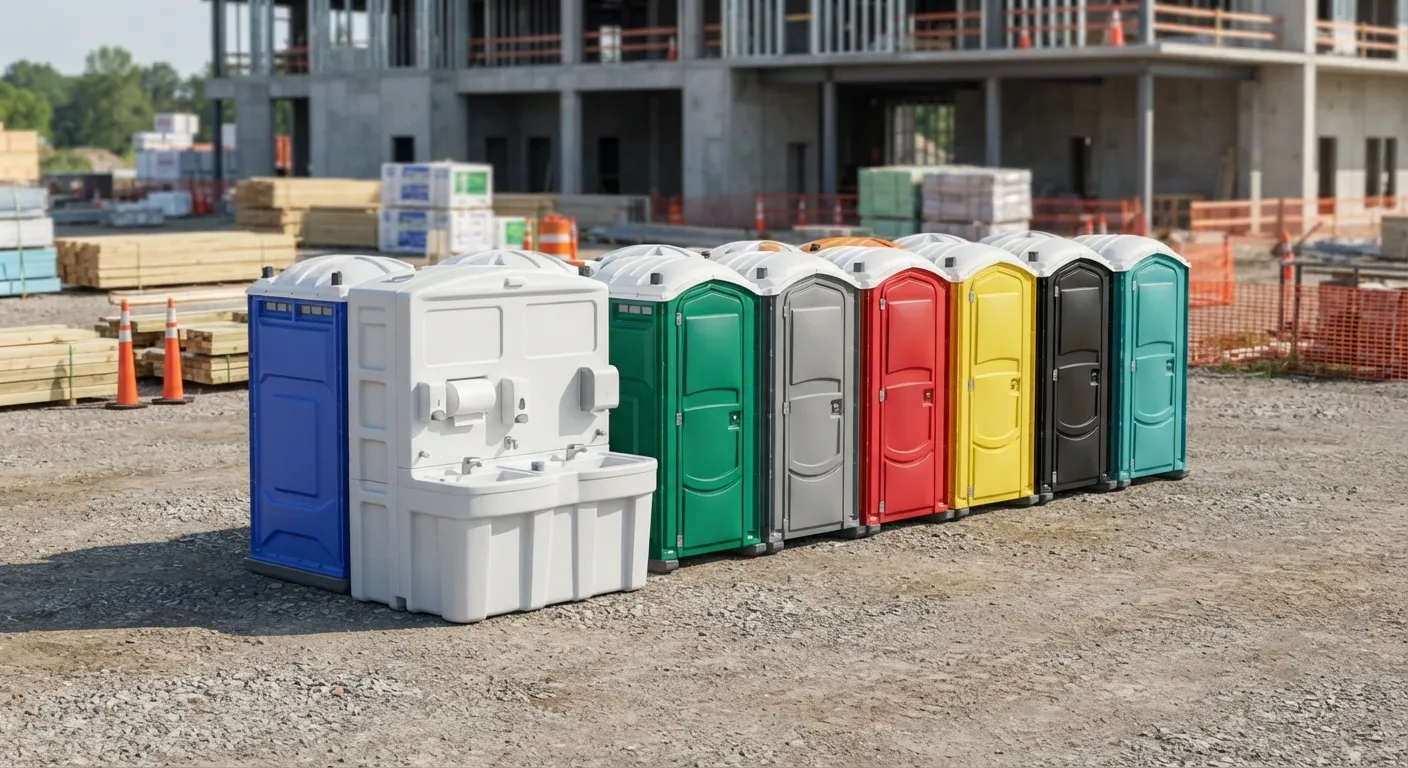
Placement follows the same access rules as any job site, just under worse conditions. A roll-off delivery still needs about 60 feet of straight clearance behind the truck, and that doesn't change because the ground is wet or the driveway is blocked with debris, so clear a path before the truck arrives if you can. ADA Standards section 213.2 requires that at least 5 percent of clustered single-user toilet units be accessible, never fewer than one, a rule that still applies when a shelter or relief site sets up in a parking lot or open field. Our ADA accessible porta potty units meet that standard and the required 60 inch turning space under ADA Standards 304.3.1.
If you're not sure how many units a shelter or staging area needs, our how many porta potties do I need guide walks through the math by headcount and duration. For general placement rules outside of emergencies, see our porta potty placement guide. We also stock temporary fence rental and light tower rental equipment, both common needs at night-shift cleanup and relief sites in Waterbury where normal lighting is gone.
| unit | duration | typical price |
|---|---|---|
| standard | day | $150 |
| standard | week | $200 |
| ada | day | $230 |
| septic | day | $250 |
How much does emergency sanitation cost during a disaster response?
Pricing follows our normal rate bands, standard units run in the $100 to $350 daily range, and septic response calls typically fall between $150 and $300 a day. Emergency dispatch doesn't carry a separate markup on the unit itself, though delivery timing can affect fees. See our porta potty rental cost page for the full breakdown.
Do you serve disaster relief sites outside Waterbury?
Yes. We regularly stage units in nearby towns during regional events, including Bristol and Southington, both under 13 miles from Waterbury. Check our service areas page or request a quote for current coverage during an active response.
Can you set up sanitation for a shelter with no water or power on site?
Yes. We pair holding tank units with self-contained handwashing stations so shelters run without municipal hookups. This is the same setup used for disaster relief sanitation requests statewide, and it can go up fast with no plumbing tie-in required.
What happens if a septic system fails during a storm?
We can run emergency pump-outs and set temporary holding tanks while repairs happen. Our septic pumping service team handles failures directly, and residential tanks are typically pumped every 3 to 5 years under normal conditions, faster if storm water infiltration overloads the system.
Do disaster response units need permits in Waterbury?
Placement in the public right of way needs confirming with the city; we haven't verified a specific rule for emergency conditions. For private property during a declared emergency, standard placement usually applies. See porta potty permit requirements or contact us directly to confirm before deployment.
Next step
Get a delivery date
Tell us the address, the dates and the headcount. We size the order and confirm the route.