
Do you need a permit for a porta potty in Waterbury?
It depends on where the unit sits. A unit placed entirely on private property, tucked against a fence line or garage, almost never triggers a permit review anywhere we work. The trouble starts at the curb. If a portable toilet rental or a standard porta potty rental has to sit on a sidewalk, in a driveway apron the city maintains, or anywhere within the street right of way, that is a different conversation. Waterbury is the deciding authority here, not us, and we have not verified a specific ordinance number, so we will not guess one. Call the city before you commit to a street-side spot. This same logic applies whether you are running a home renovation porta potty job or staging units for construction site services. We can help you plan placement, but the permit call belongs to the property owner or the general contractor of record. Every portable toilet rental Delaware or Connecticut crew deals with this same private-property-versus-curb split, and a Delaware porta potty rental site or a portable toilet rental Delaware jobsite will hit the identical question before delivery day.
Where can you legally place a porta potty on a job site?
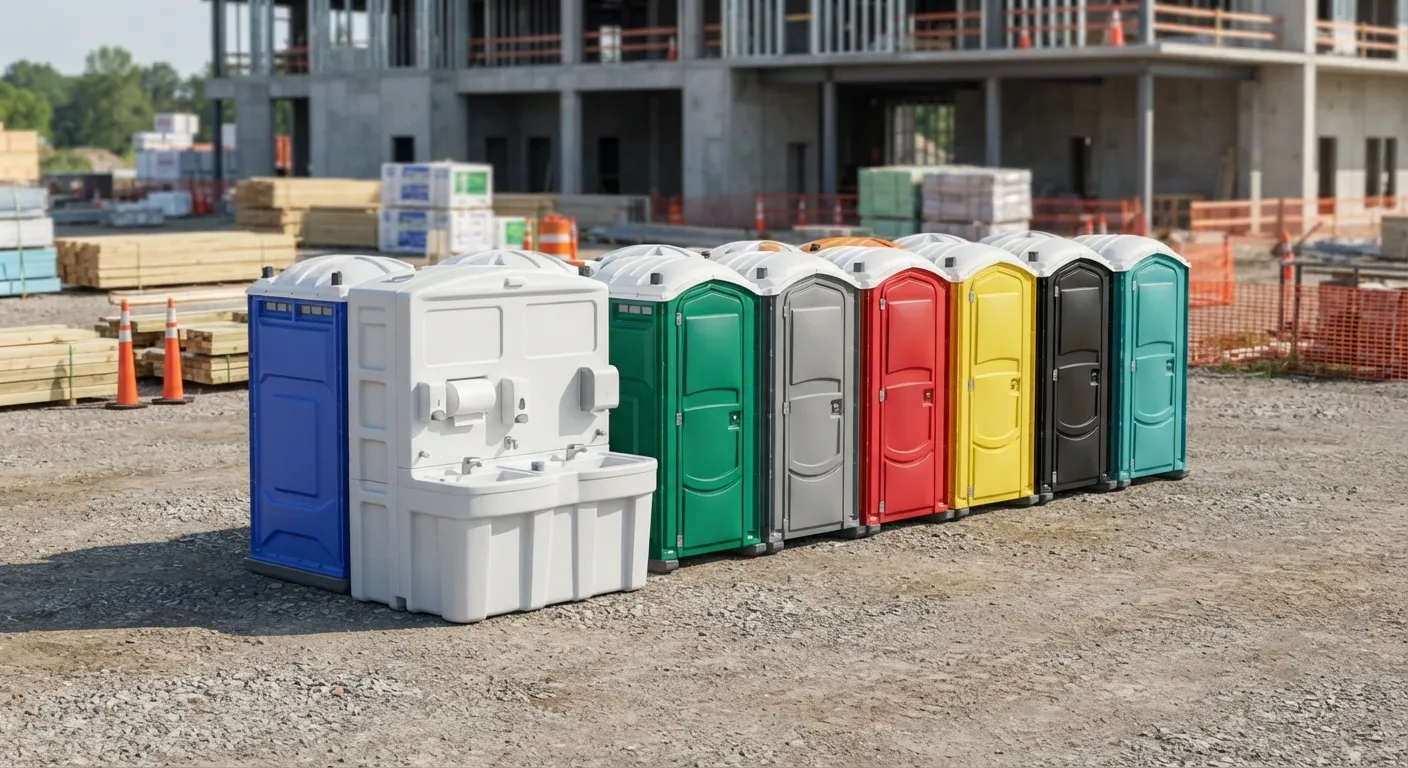
Placement rules mostly come down to access and stability, not just permits. ADA Standards section 302.1 requires the ground surface under and around an accessible unit to be stable, firm and slip resistant, which rules out soft turf or loose gravel for those units. A standard unit runs about 44 by 48 inches on the ground and stands roughly 92 inches tall, so give it clearance from overhangs and low branches. For construction sites specifically, OSHA 1926.51(c)(1) sets the toilet ratio: one facility for 20 workers or fewer, then one toilet seat and one urinal per 40 workers as the crew grows past that. We cover the placement logic in detail on our porta potty placement guide, and if you are still working out headcount, the how many porta potties do I need page walks through the math. Waterbury sites within 12 miles of Bristol or Southington follow the same OSHA math regardless of which town they sit in.
Do dumpster rentals need a permit too?
Roll-off dumpsters follow a similar split: driveway placement is usually simple, street placement usually is not. A permit for a dumpster on the street is common in dense cities, much like a Jersey City dumpster permit or a roll-off dumpster rental Delaware project would require, and Waterbury may require the same, but we have not verified a specific fee or code section, so ask the city's permitting office directly before drop-off. Do you need a permit for a dumpster at all depends entirely on where the container sits, not on the size of the container itself. What we can verify is the physical setup: a roll-off delivery needs about 60 feet of straight clearance behind the truck to land the container safely. That clearance requirement alone rules out a lot of tight urban curb cuts. If you are sizing a container, our dumpster sizes and dimensions page and roll-off dumpster rental page both cover footprint. For rules on what you can legally toss, see what cannot go in a dumpster and dumpster weight limits. We list general guidance on dumpster permit requirements, but again, the city has the final word on street placement, not us.
What about temporary power poles and other site equipment?
A temporary power pole almost always needs an electrical permit and inspection, because it ties into a live service, unlike a porta potty or a dumpster sitting passively on a lot. If your project also needs a light tower rental or temporary power pole setup, budget extra lead time for that inspection step; it is a different permit track entirely from sanitation or waste equipment. GFCI protection under OSHA 1926.404(b)(1)(ii) applies to construction power regardless of permit status. Temporary fencing is its own category too. A temporary fence rental or chain link temporary fence placed on private property rarely needs sign-off, but fencing that narrows a public sidewalk usually does. Barricades used for worker protection fall under OSHA 1926.202, which requires them to conform to ANSI D6.1. Check our temporary fence cost page for setup pricing once you know your layout, and see crowd control barrier rental if the job is event-facing rather than construction-facing.
Do I need a permit for a porta potty in my own driveway?
Almost never. A unit fully on private property, like a driveway or backyard, is standard practice across Waterbury and nearby towns like Meriden and Hamden. The city gets involved only when a unit sits in the right of way. Confirm sidewalk or curb placement before delivery.
Does an event need a different permit than a construction site?
Sometimes. Events often need a site permit from the venue or city parks department separate from any sanitation permit, especially for road closures. See our event restroom rental and festival restroom rental pages for planning details specific to public gatherings.
How many toilets does OSHA require on a job site?
OSHA 1926.51(c)(1) sets one toilet for 20 workers or fewer, then one toilet seat and one urinal per 40 workers as crew size grows, up to one per 50 workers at 200 or more employees. This applies to construction sites, not events.
Is a permit required for a roll-off dumpster in a driveway?
Usually not, since driveway placement stays on private property. Street placement is the trigger for most permit requirements in cities generally, including possibly Waterbury, though we recommend confirming with the city rather than assuming either way.
Who do I call to confirm placement rules in Waterbury?
Contact Waterbury's permitting or public works office directly, since exact code sections were not verified for this page. You can also request a quote from Waterbury Porta Pros and we will flag any placement question worth a city call before delivery.
Next step
Get a delivery date
Tell us the address, the dates and the headcount. We size the order and confirm the route.